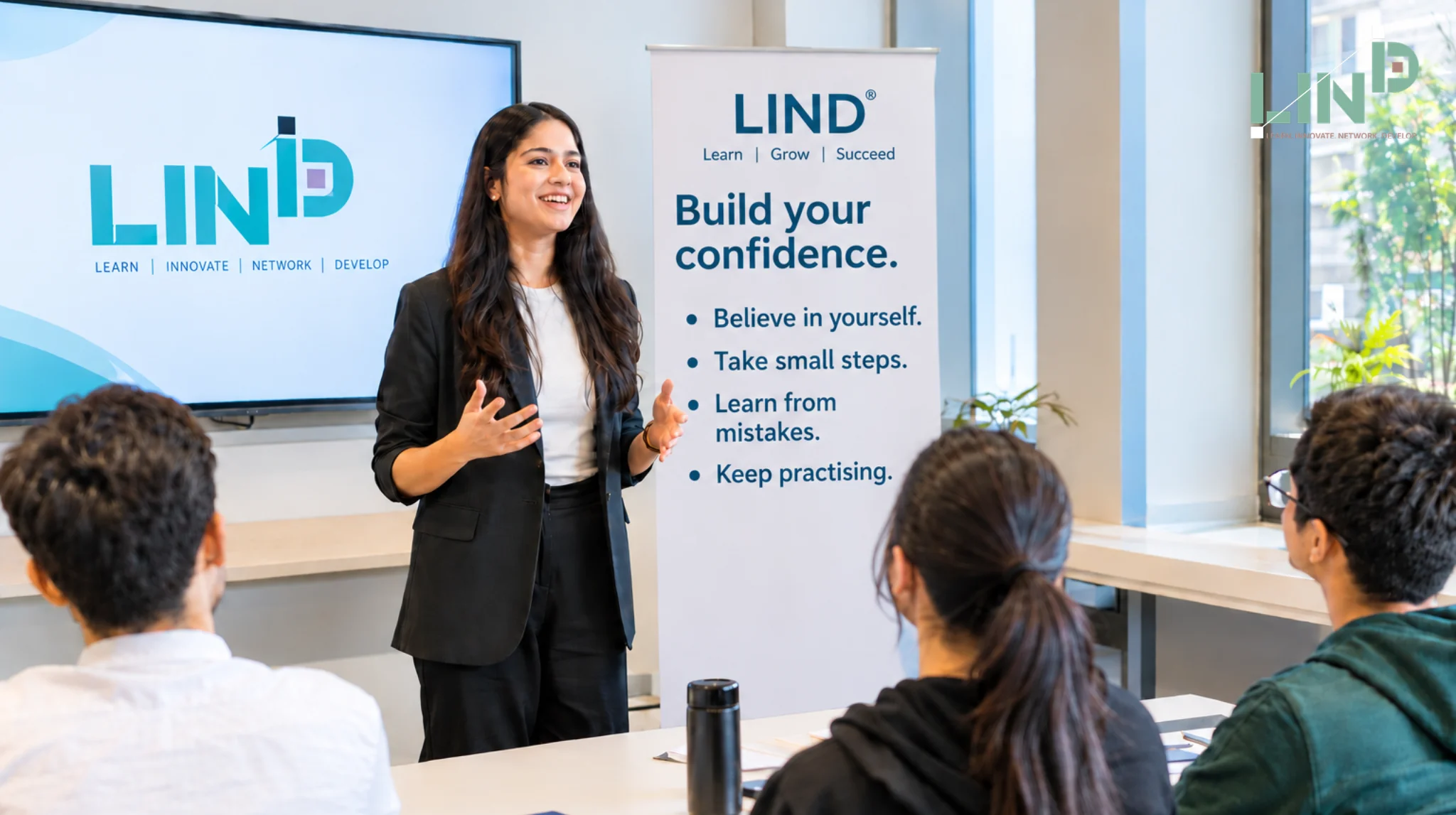
“Nothing can dim the light which shines from within.”
— Maya Angelou
Confidence starts with believing in yourself. Knowing your strengths and accepting yourself can help you feel more comfortable in different situations.
Confidence can affect how we speak, think, make decisions, and handle challenges. Whether you are a student, teenager, professional, or business owner, confidence can help you express yourself clearly and try new things.
Being confident does not mean you will never feel nervous. It is normal to feel nervous before a presentation, interview, meeting, or important conversation.
Confidence means taking action even when you feel nervous
The good news is that you can improve your confidence. By practicing, setting small goals, communicating better, and having a positive mindset, you can feel more comfortable with yourself and trust your abilities.
Here are 10 simple and effective ways to level up your confidence.
10 Effective Ways to Level Up Your Confidence
1. Know Your Strengths
Start by thinking about the things you are good at.
Many people focus on their weaknesses and compare themselves to others. This can make them feel less confident.
Instead, ask yourself:
- What am I good at?
- What skills do I have?
- What have I done well?
- What do people like about me?
- What have I gotten better at recently?
Your strengths do not need to be big achievements. You may be a good listener, creative, a good speaker, or good at working with others.
Write down three things you are proud of. Read the list whenever you feel unsure about yourself.
Knowing your strengths can help you trust yourself more.
2. Set Small Goals
Do not expect to become confident overnight. Start with small and simple goals.
For example:
- Ask a question in class.
- Share an idea in a meeting.
- Talk to someone new.
- Give a short presentation.
- Take part in a group activity.
Every time you complete a small goal, you become more confident in your abilities. It shows you that you can handle new situations.
Then, set another small goal and keep moving forward.
Small steps can lead to big changes over time.
3. Improve Your Communication Skills
Good communication can help you feel more confident.
Practice speaking clearly and listening carefully. Make natural eye contact and take your time when you speak.
You can improve your communication by:
- Speaking slowly and clearly
- Asking questions
- Listening carefully
- Sharing your ideas
- Practising conversations
- Using confident body language
You do not have to be the loudest person in the room. Good communication is about expressing your thoughts clearly and understanding other people.
At LIND Institute, confidence and communication training covers areas such as public speaking, stage confidence, presentation skills, storytelling, and verbal and non-verbal communication.
4. Step Outside Your Comfort Zone
It is easy to stay with things that feel familiar. But trying new things can help you build confidence.
You can start by:
- Giving a short speech
- Meeting someone new
- Joining a new activity
- Asking a question
- Volunteering for a task
- Sharing your opinion
It is normal to feel nervous at first.
You do not have to make big changes right away. Start with something that feels a little challenging. Once you feel comfortable with it, try something a little harder.
Taking small steps outside your comfort zone can help you become more confident over time.
Every new experience can help make your comfort zone bigger.
A Thought About Believing in Yourself
“Believe you can and you’re halfway there.”
— Theodore Roosevelt
Believing in yourself can help you take the first step. You may still feel nervous, but trusting yourself can make it easier to move forward.
5. Change Negative Self-Talk
How you talk to yourself can affect your confidence. Sometimes, you may have thoughts like:
“I cannot do this.”
“Everyone is better than me.”
“I will fail.”
When you have these thoughts, try to replace them with positive and realistic ones.
Instead of saying:
“I cannot do this.”
Say: “I can learn this with practice.”
Instead of saying:
“I am bad at speaking.”
Say: “I can get better at speaking.”
You do not need to think everything is perfect. Be kind to yourself and focus on what you can improve. Small changes can help you feel more confident over time.
6. Prepare Before Important Situations
Preparing well can help you feel more ready and confident.
Before an interview, presentation, meeting, or speech:
- Learn about the topic.
- Write down the main points.
- Practise what you want to say.
- Think about questions you may be asked.
- Prepare how you will start and finish.
You can also practise in front of a friend or record yourself while speaking.
Good preparation can reduce stress and help you focus on what you need to do.
You do not need to be perfect. You just need to be prepared.
7. Improve Your Body Language
Your body language can also show confidence.
Try to:
- Sit or stand comfortably.
- Keep your shoulders relaxed.
- Make natural eye contact.
- Speak clearly.
- Avoid speaking too fast.
- Use simple hand movements.
- Keep a relaxed facial expression.
You can be yourself without trying to copy someone else. The goal is to feel comfortable and confident in your own way of communicating.
With regular practice, confident body language can start to feel more natural.
8. Learn From Your Mistakes
Being afraid of mistakes can stop you from trying new things. But mistakes are a normal part of learning and improving.
When something goes wrong, ask yourself:
- What went well?
- What can I improve?
- What did I learn?
- What can I do differently next time?
Do not think:
“I made a mistake, so I cannot do this.”
Instead, think:
“I made a mistake, but I can learn and do better next time.”
Every mistake is a chance to learn and improve.
Confidence does not mean never failing. It means being ready to try again.
9. Celebrate Your Progress
Many people think more about what they have not achieved. Instead, try to notice the things you have improved.
Maybe you spoke in front of a group for the first time.
Maybe you answered a question in class.
Maybe you shared an idea in a meeting.
Maybe you tried something you were once afraid to do.
These are all signs that you are improving.
Keep a simple list of the things you have done well. Read it whenever you feel unsure about yourself. It can show you how much progress you have made.
Progress does not have to be big to be important.
10. Keep Practising
Confidence grows with practice.
If you want to get better at public speaking, practise speaking. If you want to improve your communication, have more conversations. If you want to feel more confident in meetings, start sharing your ideas.
The more you practise, the more comfortable these situations will feel.
You do not need to improve everything at once. Choose one skill, practise it regularly, and then move on to the next one.
Confidence Building for Children and Teenagers
Confidence is important for children and teenagers. Young people may feel nervous about school, friends, exams, public speaking, or what others think about them.
Parents can help children build confidence by giving them chances to:
- Share their opinions
- Ask questions
- Try new activities
- Make simple decisions
- Speak in front of others
- Learn from mistakes
- Take responsibility
Parents should not focus only on results. It is also important to praise their effort.
For example:
“You worked hard on that.”
“You kept trying.”
This helps children understand that they can improve their skills with practice and effort.
Confidence Building for Students and Professionals
Students need confidence when giving presentations, answering questions, taking part in group discussions, and preparing for their future careers.
Professionals may need confidence during interviews, meetings, presentations, client conversations, and leadership situations.
Confidence does not mean being the person who talks the most. A confident person can listen carefully, communicate clearly, accept feedback, and share ideas respectfully.
Improving communication, presentation, and leadership skills can help people feel more comfortable and confident in these situations.
A Thought About Personal Growth
“You are never too old to set another goal or to dream a new dream.”
— C. S. Lewis
Confidence is not limited by age. Anyone can build their confidence at any stage of life.
How LIND Can Help With Confidence Building
At LIND Institute, confidence building focuses on communication, public speaking, personal development, and practical skills.
LIND’s Confidence & Communication Training Programs cover:
- Public speaking
- Stage confidence
- Communication skills
- Presentation skills
- Storytelling
- Verbal and non-verbal communication
- Overcoming fear and hesitation
The training includes practical activities, role plays, case studies, and personalised guidance.
If you are looking for confidence building training in Dubai, practical training can help you practise your skills and feel more comfortable speaking and interacting with others.
Final Thoughts
Confidence does not mean you will never make mistakes or feel nervous. It is about trusting yourself enough to try, learn, and improve. Start with small steps, speak up, try something new, and prepare yourself before important situations. Learn from your mistakes, celebrate your progress, and keep practising. With the right guidance and regular practice, you can become more comfortable with yourself and your abilities.
So LIND Institute is here, the Best skill development training institute in Dubai, helps children, students, and professionals build confidence through practical training in communication, public speaking, presentation skills, and other real-life activities. Learners from Al Nahda can benefit from LIND’s skill development and confidence-building programs. LIND also supports learners from Al Qusais with practical training designed to improve their skills and confidence. Your confidence can grow, one small step at a time.
Frequently Asked Questions
- How can I improve my confidence?
Set small goals, practise regularly, learn new skills, and believe in yourself.
- What is the best way to build confidence?
Practise regularly, start with small challenges, and slowly try more difficult things.
- Can confidence be learned?
Yes. You can build confidence through practice, preparation, positive thinking, and learning from mistakes.
- How can I build confidence in children?
Encourage children to try new things, praise their efforts, let them make simple choices, and help them learn from mistakes.
- How can LIND Institute help with confidence building?
LIND Institute offers practical training in communication, personality development, leadership, and other skills to help learners build confidence.